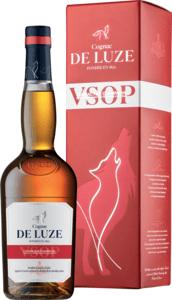
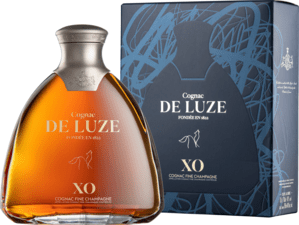
Today, the Boinaud family owns the largest distillery in the Cognac region with 41 Charentais pot-stills. The basis of their cognacs is unfiltered wines, distilled twice in small-volume distillation apparatus. Boinauds usually let their cognacs…
Today, the Boinaud family owns the largest distillery in the Cognac region with 41 Charentais pot-stills. The basis of their cognacs is unfiltered wines, distilled twice in small-volume distillation apparatus.
Boinauds usually let their cognacs ripen for longer than the minimum statutory period (this is at least 2 years for VS, at least 4 years for VSOP and at least 6 years for XO). For individual types of cognacs, they carefully select not only the raw material, but also the type of cellar, because there is a difference where the "living water" matures. They have wet and dry cellars at their disposal, which together with the barrels give their family treasure unique properties - their distinctive taste, individuality and strength. The cellars built over the course of four centuries are based on the quality on which French experts base themselves.
De Luze distillery also produces its own barrels for maturing its cognacs. Carefully selected oak wood dries for 3-5 years until it is mature enough to produce a quality barrel. The optimality of long-term maturation of cognac also depends on the right choice of wood and the perfect shape of the barrel. It is precisely these two factors that can give cognac unusual elegance during aging.
The master in the creation of cognac blends is currently Eric Boinaud, considered an artist in combining the delicious tastes of cognac. He has something to draw on - the family has gained respect in this field through experience gained during the 400-year history of the company.
The first mention of the Boinaud family buying large plots of land for their vineyards dates back to 1640. In 1817, the enterprising Baron Alfred Boinaud de Luze founded a company in New Amsterdam (now New York) to import French wine and alcohol to the United States. Five years later, he founded De Luze & Son. In 1862, Baron Alfred bought more land in the Grand Champagne region and began producing high-quality cognacs. Although this active man died in 1880, the family company continues to move and since 1927 has been supplying luxury De Luze cognacs to the court of King Christian X of Denmark. again into the hands of the Boinaud family and to Grand Champagne, where its history began. And it produces the famous cognac quality to this day.
Today, the Boinaud family owns the largest distillery in the Cognac region with 41 Charentais pot-stills. The basis of their cognacs is unfiltered wines, distilled twice in small-volume distillation apparatus. Boinauds usually let their cognacs…
Today, the Boinaud family owns the largest distillery in the Cognac region with 41 Charentais pot-stills. The basis of their cognacs is unfiltered wines, distilled twice in small-volume distillation apparatus.
Boinauds usually let their cognacs ripen for longer than the minimum statutory period (this is at least 2 years for VS, at least 4 years for VSOP and at least 6 years for XO). For individual types of cognacs, they carefully select not only the raw material, but also the type of cellar, because there is a difference where the "living water" matures. They have wet and dry cellars at their disposal, which together with the barrels give their family treasure unique properties - their distinctive taste, individuality and strength. The cellars built over the course of four centuries are based on the quality on which French experts base themselves.
De Luze distillery also produces its own barrels for maturing its cognacs. Carefully selected oak wood dries for 3-5 years until it is mature enough to produce a quality barrel. The optimality of long-term maturation of cognac also depends on the right choice of wood and the perfect shape of the barrel. It is precisely these two factors that can give cognac unusual elegance during aging.
The master in the creation of cognac blends is currently Eric Boinaud, considered an artist in combining the delicious tastes of cognac. He has something to draw on - the family has gained respect in this field through experience gained during the 400-year history of the company.
The first mention of the Boinaud family buying large plots of land for their vineyards dates back to 1640. In 1817, the enterprising Baron Alfred Boinaud de Luze founded a company in New Amsterdam (now New York) to import French wine and alcohol to the United States. Five years later, he founded De Luze & Son. In 1862, Baron Alfred bought more land in the Grand Champagne region and began producing high-quality cognacs. Although this active man died in 1880, the family company continues to move and since 1927 has been supplying luxury De Luze cognacs to the court of King Christian X of Denmark. again into the hands of the Boinaud family and to Grand Champagne, where its history began. And it produces the famous cognac quality to this day.