



How to Choose Wine?
Choosing the right wine is truly an art. However, we can help you with that. Come take a look with us at a brief history of the creation of this unique beverage!
Wine is an alcoholic drink made by the fermentation of the pressed juice from the fruit of the grapevine - grapes.

Archaeologists discovered 9,000-year-old remnants of rice and honey wine on ceramic shards from China, providing clear evidence that people in ancient times were familiar with fermentation. This discovery spread to other parts of the world. In the Middle East, remnants of grapes were found in 7,400-year-old cups. In Egypt, medical vessels were found that contained wine in a 5,000-year-old tomb of Pharaoh Scorpion I.

The largest wine producer in the world is Italy. Spain has the largest vineyard area. And the USA is the largest wine consumer in the world.
Viticulture is the domain of the subtropical region, but it also thrives in warmer and lower-lying areas of the temperate zone.
Vineyards also flourish in northern areas that are atypical, such as Latvia and Scandinavia - Norway and Sweden.
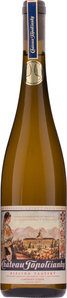
Wineries are also found in the Mosel-Saar-Ruwer region in Germany. In the mountains. There, world-class white wines are produced. However, winemakers must take a cogwheel train to their vineyards on the hills.
In Slovakia, we have the largest vineyards in the Small Carpathian wine region. The cultivated area is 7,304 hectares. The cultivation of white varieties predominates, especially Grüner Veltliner and Welschriesling. Under the Carpathians, blue varieties such as Saint Laurent and Blaufränkisch also thrive.

A good winemaker knows that the quality of wine depends on the quality of the grapes. It is important to have the right variety on suitable soil and in a good region, old and quality vineyards, with a reasonable yield per hectare. Quality harvesting and good weather are also key.
Grape pressing is an important step for wine quality. Gentle pressing is crucial to obtain quality juice without bitterness and astringency. In Champagne, pressing is done very carefully, leading to the best sparkling wines.
Fermentation is the process where yeast converts sugars into alcohol and carbon dioxide. It is important to pay attention to this process. Fermentation can take place in wooden or stainless steel containers. Some winemakers use selected yeasts, while others prefer natural microflora, especially in biodynamic vinification. Controlled fermentation is used to maintain the optimal temperature of the juice.

Glass or wooden containers - barrels - can be used for wine aging. In modern wineries, these are mostly stainless steel tanks. In recent decades, oak barrels, especially of the barrique type, have been widely used for aging. Wooden barrels are inseparable from wine production, primarily due to their unique properties - porosity, biochemical composition, but also thermal insulation capabilities.

Grapes are the most cultivated fruit in the world.
In the past, people used to drink wine out of thirst. In those times, it was much safer than drinking water. Because fermentation, which is natural in the production process, can kill pathogens like salmonella or cholera.
From one ton of grapes, 720 bottles of wine are produced.

There are several criteria for classifying wine. Basic classification:
- Natural wine (without chemical treatment)
- Processed wine
Classification by color:
- White wine
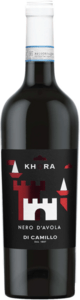
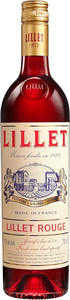
- Red wine
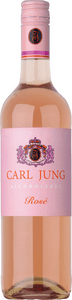
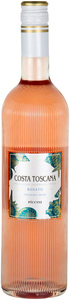
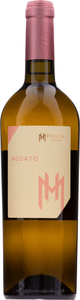
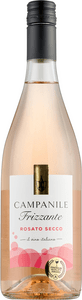
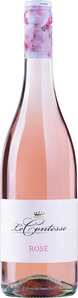
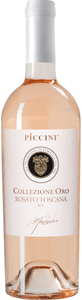
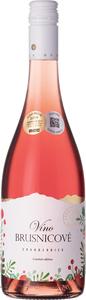
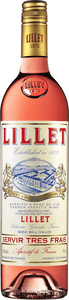
- Rosé wine
Classification by processing perspective:
- Varietal wine
- Brand wine cuvée (wine) selection (wine)
Classification by sugar content
- Still dry wines (maximum 4 g.l−1 residual sugar)
- Off-dry (4.1–12 g.l−1 residual sugar)
- Semi-sweet (12.1–45 g.l−1 residual sugar)
- Sweet (minimum 45 g.l−1 residual sugar).
- Sparkling brut nature (naturally raw) - less than 3 g.l−1 sugar (without added sugar to the juice)
- Extra brut (especially raw) - 0–6 g.l−1 sugar
- Brut (raw) - up to 15 g.l−1 sugar
- Extra dry (especially dry) - 12–20 g.l−1 sugar
- Sec (dry) - 17–35 g.l−1 sugar
- Demi-sec (off-dry) - 33–50 g.l−1 sugar
- Doux (sweet) - more than 50 g.l−1 sugar